Google’s AI Strategy Faces Internal Skepticism Amid Employee Memes
Google’s AI-generated code claims face backlash from employees, revealing potential risks for its AI strategy.
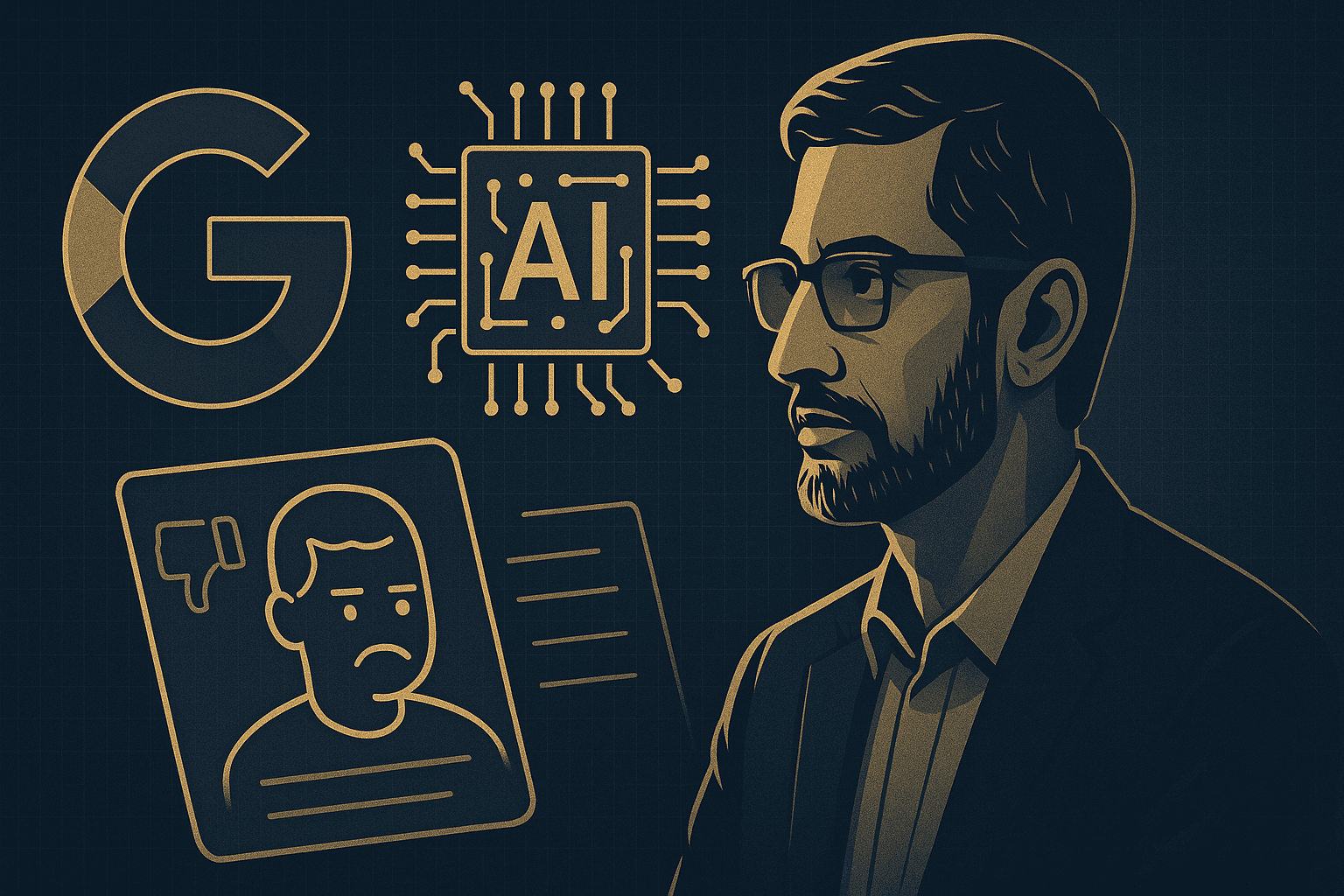
In the tech world, where innovation is king, Google finds itself in an ironic predicament. While CEO Sundar Pichai touts that 75% of Google’s new code is generated by artificial intelligence, the employees tasked with implementing this AI are less than impressed. Internally, they are sharing memes that mock the very technology that is supposed to be their ally.
What happened
According to a report from 404 Media, Google employees have started sharing memes criticizing the AI systems responsible for generating the majority of the company’s code. This internal backlash highlights a significant disconnect between the triumphal narrative presented by Google’s leadership and the day-to-day experiences of its developers. Sundar Pichai has publicly stated that AI is responsible for three-quarters of Google’s new code, a claim that appears to be met with skepticism by those on the front lines.
Why it matters
This revelation is more than just workplace grumbling; it suggests potential operational risks and credibility issues for Google. As one of the tech giants leading the charge in AI, Google’s internal discontent could undermine its market position. If employees responsible for developing and maintaining AI systems doubt their efficacy, this could slow innovation and negatively impact product quality. Moreover, these sentiments could affect Google’s reputation as an AI leader, which could, in turn, influence investor confidence and customer trust.
The precedent
Google is not the first tech company to face internal backlash against its AI initiatives. Similar sentiments have been observed in other tech giants, such as Facebook’s internal struggles with content moderation algorithms and Amazon’s failed AI recruitment tool that showed bias against women. These instances demonstrate that even the most advanced AI technologies can falter, leading to dissatisfaction among those expected to champion them.
Postmortem
The core issue here seems to be a misalignment between Google’s AI strategy and the reality experienced by its employees. The assumption that AI can seamlessly integrate into complex coding environments may have been overly optimistic. The technology, while groundbreaking, is not yet foolproof, and the challenges in its application may have been underestimated by the leadership. This disconnect can lead to inefficiencies and frustration, as employees find themselves compensating for AI’s shortcomings instead of benefiting from its promised efficiencies.
What to watch
Going forward, stakeholders should keep an eye on Google’s internal culture and how it addresses this employee dissatisfaction. Will the company take steps to reconcile the differences between leadership’s vision and employee experiences? Additionally, any changes in AI development strategies or public statements by Google executives in response to this backlash will be telling. Finally, monitoring Google’s competitors and their AI strategies could provide insight into whether this is a unique challenge for Google or indicative of a broader industry trend.
While memes may seem trivial, they underscore a larger structural question: Can AI truly live up to its hype, or are companies like Google pushing it faster than it can realistically deliver? As AI continues to evolve, striking the right balance between ambitious innovation and practical application will be crucial.